
Last Updated on 11/09/2026 by PetSmartify Editorial Team

(Disclosure: This page contains affiliate links. As an Amazon Associate, we earn from qualifying purchases at no extra cost to you.)
As slow travel becomes the dominant trend of 2026, more pet parents are ditching the stress of airport security for the scenic, relaxed train travel with pets as an alternative. The “Pawprint Economy” has hit the tracks, with major rail networks across Europe, Asia, and even expanding routes in North America offering dedicated pet carriages and pet loyalty perks.
😸 Pet-Friendly Train Companies and Services
🐾 1. Amtrak
This is the main long-distance and intercity train service in the U.S., and it has the most comprehensive pet-friendly policy:
- Small pets (dogs & cats) are allowed as carry-ons on many routes. They must be in a carrier that fits under the seat and the combined weight of pet + carrier can’t exceed ~20 lbs.
- Pets (other than service animals) are accepted only on trips up to 7 hours total travel time, including connections.
- Routes with pet reservations are most mainline routes — but some services don’t allow pets (e.g., the Auto Train, and connecting bus “Thruway” segments).
- A small pet fee applies, and reservations for pets are limited per train (usually a few pets per departure).
- Service animals trained to assist passengers with disabilities are allowed on all Amtrak trains at no extra charge.
To find out about fees, guidelines, etc., go to Amtrak’s website for more information
🚆 2. Other Regional & Local Rail Services
While Amtrak is the primary long-distance option, various regional commuter trains and scenic railways also allow pets, often with simpler rules:
- Commuter & light rail services in some areas let small pets on board if they’re in secure carriers (e.g., New Jersey Transit, Metro North Railroad, and others).
- Many scenic tourist railroads, like the Conway Scenic Railroad in New Hampshire or Lehigh Gorge Scenic Railway in Pennsylvania welcome leashed dogs on regular rides (often for free or a small fee).
👉 These don’t work like national trains, but they’re great options if you’re profiling pet-friendly day trips or scenic experiences.
🐕 Key Things to Remember
- Always check the carrier and weight rules before booking. Many trains require the pet to stay in a carrier under the seat.
- Service animals are treated separately from pets and don’t count toward pet limits.
- Not all routes allow pets, even within Amtrak, so planning is essential.
- Regional commuter trains’ policies vary widely, so research specific systems before travel.
However, a train station is a sensory-overload environment. Between the screeching of brakes, the hustle of commuters, and the tight gaps between platforms, you need more than just a leash. You need a smart rail strategy.
🏆 Best Smart Pet Tech for Train Travel with Pets
1. Navigating the Station: Best Pet Carrier for Trains
Trains often involve long walks through terminals and navigating narrow aisles. Your carrier needs to be an extension of your own movement.
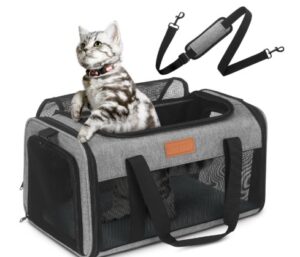
- Petux Pet Carrier: The favorite for rail commuting. The 3-sided mesh ventilation keeps airflow flowing through and allows easy visibility, so you don’t need to keep unzipping to check on your pet.
Price Range: $40 – $50
2. Managing the Noise: Noise-Cancelling Earmuffs for Dogs or Cats
The high-pitched sound from the air brakes and the roar of tunnels can be physically painful for a pet’s sensitive ears.
- Ninuo Calming Earmuffs: These are specifically designed for dogs with sound phobias. They use active noise-cancelling tech to dampen the sound of the tracks, keeping your pet calm.
Price Range: $65 – $75

3. Real-Time Tracking & Digital IDs
Train stations are high-risk zones for unexpected escapes.
- Tractive GPS: On a train, you are moving through different cell towers rapidly. The latest Tractive models use multi-network LTE connectivity, ensuring that if your pet slips out during a quick platform stop, you can track them in real-time on your phone across entire provinces or states.
Price Range: $45 – $85
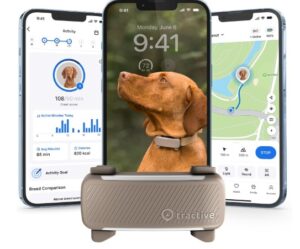
Tractive Dog 6 GPS Tracker
Unlimited range
Safe zones & get alerts
Vital signs monitoring
Health & barking alerts
Escape alerts & location history
14-day battery life
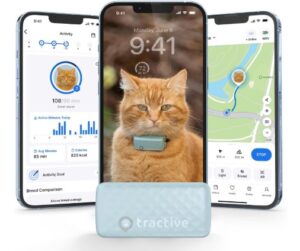
Tractive CAT Mini
Health, sleep & activity monitoring
Virtual fences
Location history
Lightweight & waterproof
Subscription required
4. Hydration & Hygiene on the Go
- PETKIT Filtered Water Bottle: This bottle’s one-touch dispense system allows you to give your pet a quick drink during a 2-minute station stop without the mess of a traditional bowl.
Price Range: $10 – $15

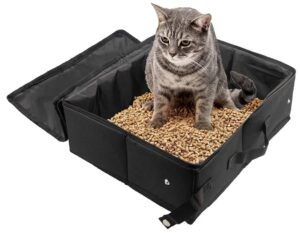
- Portable Potty: For long-distance rail (like the Blue Train or European night trains), a collapsible, waterproof travel litter tray is non-negotiable for cats. For dogs, carry absorbent “travel pads“ with carbon technology to neutralize odors instantly if an accident happens on a long stretch.
Price Range: $10 – $15
🚆 Tips for Traveling by Train with a Pet
- Use the Accessibility Gates: Don’t try to squeeze a carrier through a standard ticket turnstile, rather use the wider mobility gates. They give you and your pet more time to pass without the gates snapping shut.
- The Off-Peak Secret: If possible, book travel between 10:00 AM and 3:00 PM. Trains are quieter, there’s more floor space for your carrier, and staff are generally more relaxed about pets.
- Station Dry Runs: Before a 7-hour journey, take your pet to the station for 15 minutes. Let them hear the trains and smell the environment while rewarding them with high-value treats to build a positive association.
This guide focuses specifically on train trips. For flying, road trips, hotel stays, and outdoor adventures, explore our complete guide on smart pet travel for 2026.
🚆 Frequently Asked Questions about Train Travel with Pets
Are pets allowed on trains?
Policies vary. In the U.S., Amtrak allows small pets on some routes for trips under 7 hours. Always check the train operator’s pet policy.
What’s the best pet carrier for train travel?
A soft-sided, well-ventilated smart carrier is ideal. Choose one that’s lightweight and has secure zippers and breathable mesh.
Can my pet sit on my lap during the train ride?
Usually no. Most train services require pets to remain in their carriers under your seat during the journey.
Are there size or weight restrictions for pets on trains?
Yes, most train services limit pets to small sizes and weights, often under 20 pounds. Always check the specific train’s policy.
Do I need a ticket for my pet on the train?
Many train operators require a separate pet ticket or fee. Verify this with your train service before booking.
Can I bring food or water for my pet on the train?
Yes, bring small portions of food and water. Avoid overfeeding during travel to prevent discomfort.
PetSmartify is a participant in the Amazon Services LLC Associates Program and other affiliate programs. We may earn a small commission from purchases (at NO additional cost to you)
Product prices and availability are accurate as of the time of publication and are subject to change. Any price and availability information displayed on Amazon or any other retailer’s website at the time of purchase will apply.